Saturday, March 14, 2015

Worth visiting- Kamakura


Hello! Today I want to mention one of my favorite's places in Japan- Kamakura. Kamakura is situated near Tokyo and that's why I strongly recommend for everyone staying at Tokyo to go on one-day trip to this beautiful town at the seaside. Kamakura is an ideal places for a trip. There are many beautiful temples, charming streets, sandy beaches, as well as the paths among the forests. 
The name Kamkura also determines a period in the history of Japan, which lasted from 1185 to 1333. This period of time started dominance of military commanders, called Shogun. For almost 700 years the emperor and his court were brought to the role of a purely ceremonial and symbolic meaning. Civil , military and judicial  power was controlled by the bushi class, of which the most powerful one was chosen as a ruler of Japan.
Mon of Kamakura Shogunate
LIST OF MONUMENTS

Great Buddha- The most famous monument in Kamakura is a temple known for its Great Buddha statue made of bronze. The statue was created in the thirteenth century and it is 13.35 meters tall and weighs about 93 tons. Until the nineteenth century the statue stood inside the wooden temple, but it was destroyed by the tsunami. However statue survived and is now in the open air.
Hasedera- Hasedera is a temple of Jodo sect and it is famous because of its statue of Kannon (the goddess of mercy). Hasedera is built on a mountain and surrounded by forests. It has a beatiful garden with ponds full of koi, which creates a breathtaking scenery. Hase temple is also well-kown for the statues of Jizou, a Bodhisattva who helps the souls of unborn children to reach the paradise (because of miscarriage or abortion).
Tsurugaoka Hachimangu- is the most important shire in Kamakura and also the place of many festivals. The shrine is dedicated to Hachiman, the patron god of the Minamoto family and of the samurai class. The path leading to the shire is decorated with toori gates and garden. Until 2010, at Tsurugaoka Hachimangu there was growing the famous 1000 years old ginko tree.

It is all for today :) I hope you like it! 


Monday, March 2, 2015

Worth visiting- Nara

~~ ** ~~
Good morning! Today I would like to start a new series of posts concerning interesting places in Japan, which are worth visiting due to the monuments located there.  For today I prepared Nara, town located in the Kansai region on the island of Honshu.
Flag of Nara
~~ ** ~~

Attack! :D
Nara is not only the the city name, but also the name of entire period, because there was a time when this city was the capital of Japan. Nara period lasted from 710 to 784 AD and monuments in Nara are inscribed on the UNESCO World Heritage Site. Nara is one of the most visited cities in Japan because of the partially preserved wooden buildings of the city and the unique mood. If you are going to Japan, you can not miss it! In Nara, not only you can see many beautiful temples, but also deers and beautiful parks.
Deers in Nara!
~~ ** ~~
LIST OF MONUMENTS
 (the list only of the most popular ones)


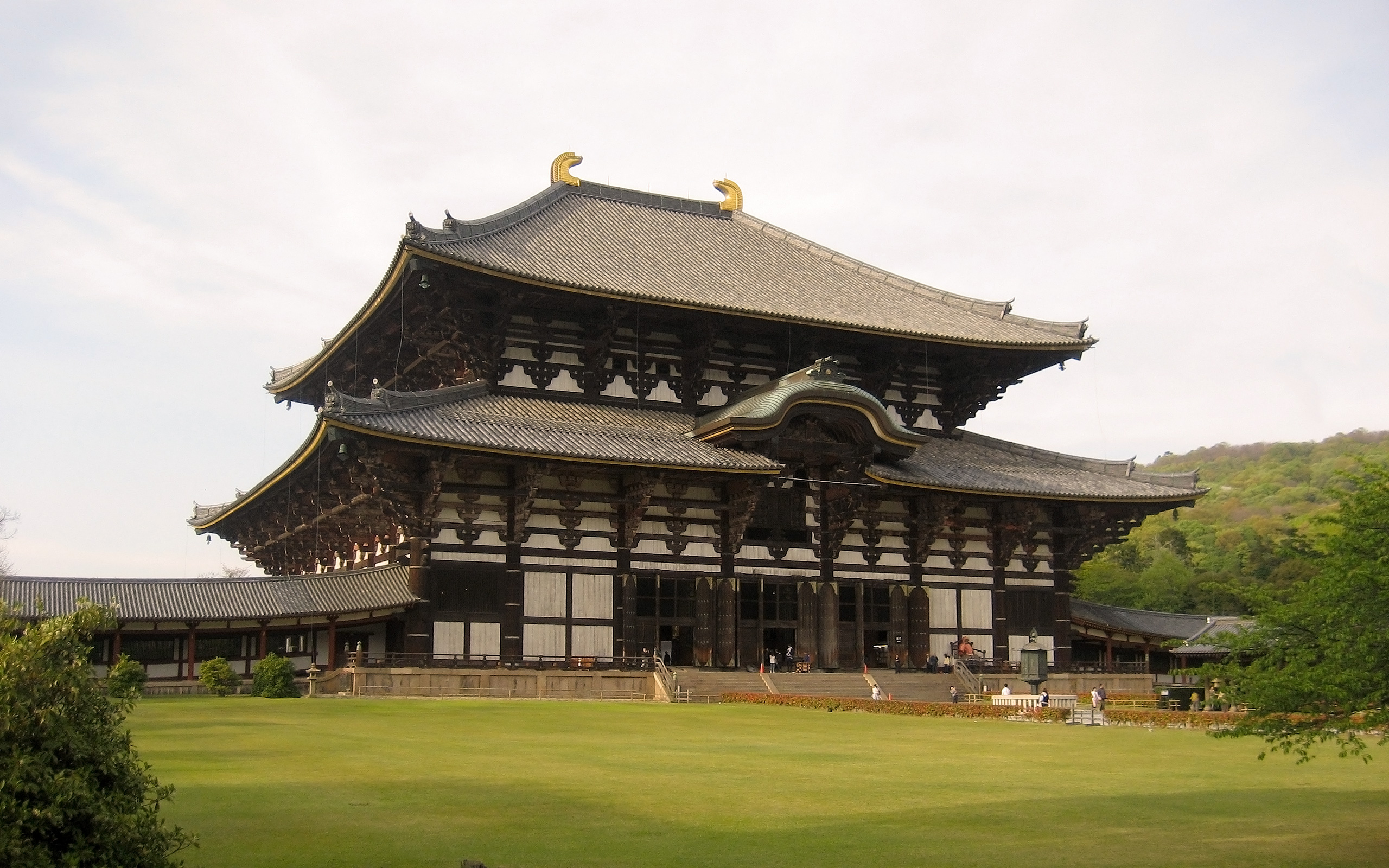
Tōdai-ji- temple (built in 752 AD) was established in order to reflect its power. Big Buddha building burned down in 1180 and again in 1567. The width of the existing building is approximately 33% smaller than the original structure, but the building of the Great Buddha at Todai-ji temple is still the largest wooden structure in the world.

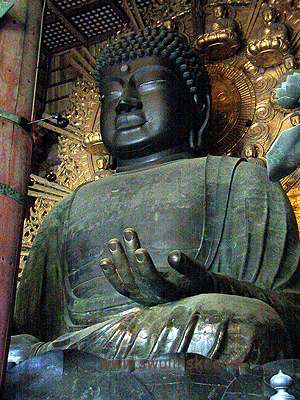
Vairocana Buddha statue ("The Buddha, which illuminates the world like the sun") is made of solid bronze, but originally was covered with gold.


Kōfuku-ji- temple founded in 669 AD, the center of Buddhism sect called Hosso. Kofuku-ji was the first temple, which was moved to Nara. Today located in the city center, it has grown rapidly, thanks to the patronage of the rulers, and the powerful Fujiwara family.


Kasuga Taisha - an important Shinto shrine in Nara, built in the eighth century belongs to the  Fujiwara family. This widely worshiped Shinto temple is famous for its thousands of stone lanterns  (donated by the faithful). Another thousand lanterns made of bronze are hanging along the eaves of buildings. They lit only twice a year: in February on the occasion of the spring, and August 15th, for the o-bon.

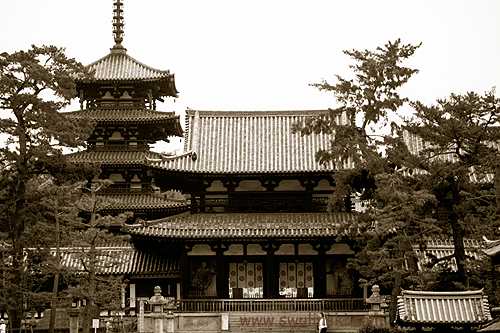
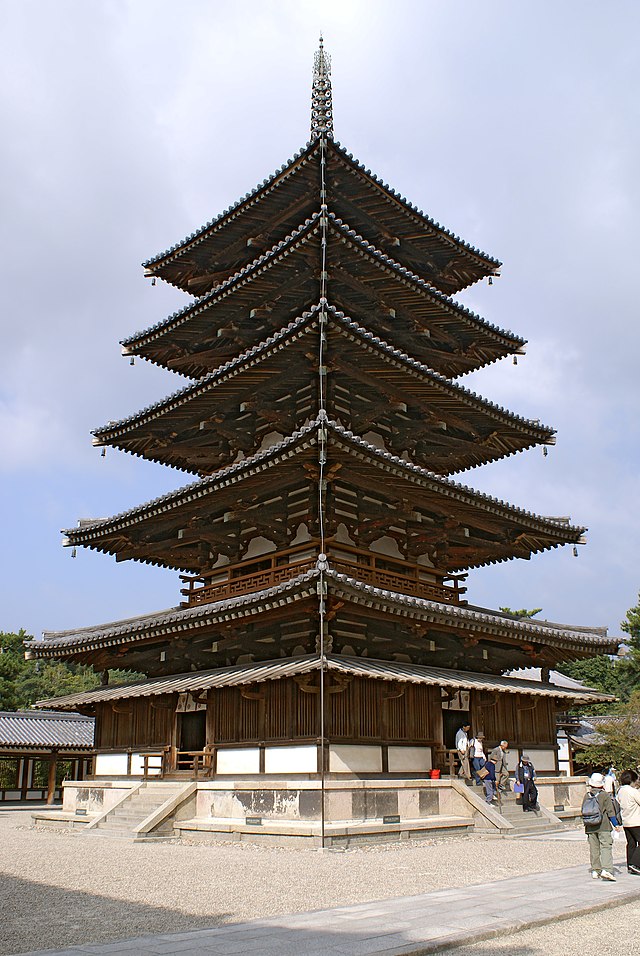
At last - Hōryū-ji -most worshiped temple in Japan, dedicated to Yakushi, the Buddha of Healing. It was founded in 607 by Prince Shotoku, the great propagator of Buddhism in Japan. The complex have survived for over 1300 years and there are located the oldest wooden buildings in the world: the main building, the five-stored pagoda, main gate and a porch of the monastery. This temple is considered to be the birthplace of Buddhism in Japan.


Thanks for reading, it is all I prepared for today :), see you next time!